What is your favorite ingredient to add to your meals and drinks? Is it sugar ? And do you know what this sweet miracle will bring you besides a momentary feeling of happiness? No. In that case, get to know sugar a little better and you might be surprised at what is hidden behind it.
We sprinkle it into our morning coffee or tea. We add it to sweet treats that we bake for our loved ones out of love and we also use it to sweeten various dishes. In addition, it is an integral part of many of our favorite foods such as sweets, cakes, cookies, biscuits, ice cream, sweet drinks or candies. We can even find it where we would never expect it. For example, in meat products, sauces, dairy products or mustard. It is the "secret" ingredient of almost all technologically processed foods, which unfortunately make up over 90 percent of all products on the market. Who am I talking about? Of course, sugar .

Our "miracle" ingredient, which has "delighted" many people. Thanks to this ability, sugar has experienced a meteoric rise in recent centuries. Its production is constantly increasing at a dizzying pace. As recently as 1985, the annual world consumption of sugar was less than 100 million tons. Today it is over 160 million tons. Sugar has experienced a huge increase, especially over the last 300 years.
In 1700, the average person consumed around 1.8 kg of sugar per year.
In 1800, the average person consumed around 8 kg of sugar per year.
In 1900, the average person consumed around 40 kg of sugar per year.
In 2009, more than half of all Americans consumed more than 225g of sugar per day, which amounts to more than 81kg of sugar per year.
In 2010, the average sugar consumption per capita was 34.3 kg, which keeps us at the level of the European average. This number has not changed much in recent years, but overall it is a slight increase compared to the recent past. On average, a Slovak consumes about 94g of sugar per day. Which represents over TWO TONS of sugar over the course of a lifetime. However, this is only an average, meaning that some people consume perhaps three times the amount of sugar compared to the average.
However, the total amount of sugar consumed is much higher, because sugar has many names and forms. For example, many people deliberately avoid sugar, but do not realize that they consume excessive amounts of sugar from other sources such as pastries, pasta, rice, potatoes or cereals. In addition, they also consume sugar "indirectly", in the form of other products where it is intentionally added. This is also proven by the fact that in the EU over the past 20 years, direct sugar consumption has decreased, but the consumption of sugar included in food products has increased very significantly.
Dextrose, fructose , and glucose are monosaccharides, known as simple sugars. The main difference between them is how your body metabolizes them. Glucose and dextrose are essentially the same sugar. However, food manufacturers use the name "dextrose" in product ingredients.
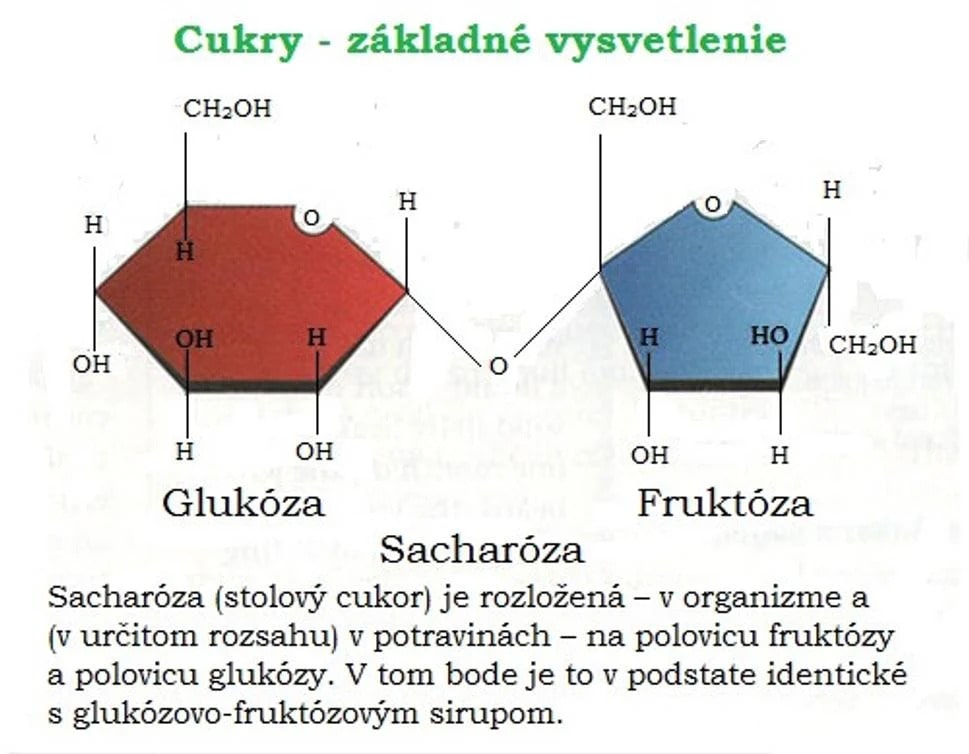
Simple sugars (monosaccharides) can combine to form more complex carbohydrates (disaccharides), such as sucrose (table sugar), which is half glucose and half fructose.
Several simple sugars combine to form polysaccharides, which are found in potatoes, cereals, rice, and corn.
High fructose corn syrup (HFCS), also known as glucose-fructose syrup, is approximately 55% fructose and 45% glucose. These numbers can vary somewhat depending on the type of sweetener.
Sugar alcohols such as xylitol, glycerol, sorbitol, maltitol, mannitol, and erythritol are neither sugars nor alcohols, but are used as popular sweeteners. They are not fully absorbed from the small intestine, so they provide fewer calories than sugar, but they often cause problems such as gas, bloating, and diarrhea.
Sucralose (Splenda) is not sugar, despite its similar name to sucrose and deceptive marketing, "made from sugar." It is a chlorinated artificial sweetener similar to aspartame and saccharin with the same harmful health effects.
Agave syrup, often advertised as "natural," is usually highly processed and 80 percent fructose. The final product bears no resemblance to the original agave.
Honey is about 53% fructose, but it is a natural product that has a number of health benefits in its raw form, as long as it is used in moderation.
Stevia is a sweetener extracted from the leaves of the plant of the same name. In its natural form, it is completely safe.

In addition to the sugars and sweeteners listed above, sugar also hides under other names, so be careful when buying food and honestly check the carbohydrate content of the food. It should be as low as possible, or at least lower than 30g per 100g of food.
The first to label sugar as a toxin was Dr. Robert Lustig, a professor of pediatrics in the department of endocrinology at the University of California, San Francisco. Dr. Lustig is one of the leading experts on childhood obesity and has pioneered the understanding of sugar metabolism. He has made many of his discoveries in the video series "The Skinny on Obesity," in which he details the dangers of sugar consumption.
The reason Dr. Lustig calls sugar a toxin is that our bodies treat sugar the same way they treat alcohol and other toxins, and therefore sugar can damage the liver and other organs in the same way.
According to Dr. Lustig, it is the excessive consumption of sugar that has caused a sharp increase in health problems and the financial costs associated with them. Although excessive sugar consumption is the main culprit of obesity, Dr. Lustig does not call it the main cause of health problems. According to him, up to 20% of obese people have a perfectly functioning metabolism and excess weight will not affect their life expectancy. The same applies to 60% of normal-weight people. However, 80% of obese and 40% of normal-weight people suffer from metabolic dysfunction, which is caused by excessive consumption of sugars, especially fructose.
Sugar is essentially the only caloric source linked to the surge in diabetes. In 1985, when global sugar consumption was 98 million tons, diabetes affected 30 million people. By 2010, sugar consumption had risen to 160 million tons and the global prevalence of diabetes had reached 346 million people .
As recently as 1893, there were fewer than 3 cases of diabetes per 100,000 people in the United States. Today, 8,000 people per 100,000 people in the United States have diabetes, and that number is growing. Approximately 25 million people in the United States have diabetes, and another 57 million have pre-diabetes. Overall, one in three Americans has or will have diabetes.
In 2010, there were already over 340,000 diabetics in Slovakia, of whom over 2,000 are children under 18. This represents an almost threefold increase compared to 1980, when there were 122,000 diabetics in Slovakia. Almost 7% of the population in Slovakia has diabetes, of which over 50 percent are people aged between 50 and 69. About one in fifteen people and one in thirteen adults in Slovakia has diabetes. However, how many people have pre-diabetes is questionable.
All of these figures are striking. All the more so since 90 to 95% of all diabetes cases are type 2 diabetes. This means that it is diabetes caused by an inappropriate diet and a bad lifestyle.

But it's not just diabetes. Excessive sugar consumption is also the main culprit behind other lifestyle-related diseases like cardiovascular disease and cancer. These "lifestyle" diseases are killing more people than communicable diseases for the first time in history.
In general, we can say that excessive sugar consumption is humanity's biggest health and nutrition problem. No other food has such a significant negative impact on health as sugar. Its negative metabolic effects are associated with at least 76 health problems. Therefore, you should eliminate sugar intake to a minimum and focus on real food.
One of the biggest dogmas that has contributed to the deterioration of health in the Western world is the belief that "a calorie is a calorie." This myth is one of the first things dietitians learn in school. Unfortunately, this statement is a complete lie . Another dogmatic belief that is simply not true is the idea that obesity is the result of eating too much food combined with not enough exercise. In other words, obese people consume more calories than they burn. These claims are simply wrong and have long been scientifically disproven.
The source of the calories we consume is crucial. Scientists have discovered that there is only one food on Earth that, thanks to its unique composition, is metabolized in the body as both fat and carbohydrate. And that food is sugar .
In general, sugar is 50 times more effective than calories in causing diabetes. Why does sugar have such an extremely powerful effect?
The answer lies in its unique structure. As I mentioned above, sugar can be metabolized as both a fat and a carbohydrate. This is because sugar contains both glucose and fructose. Each of these sugars is processed differently by your body.
Fructose is not the same as glucose
Glucose is the type of energy that we can function on. That's how we were created. Every cell in the human body, every bacterium, and even every living thing on Earth uses glucose as a source of energy. Glucose is metabolized in every organ in your body, and only about 20% of glucose is metabolized in the liver.
Fructose, however, is something completely different. Glucose is a molecule with a 6-membered ring, but fructose only has a 5-membered ring. Sucrose (table sugar) is 50 percent glucose and 50 percent fructose. So regular sugar is half fructose. It can only be metabolized in the liver, because that's the only organ that has a transporter for it. Therefore, fructose hardly raises blood sugar levels at all, but goes straight to the liver.
Since all fructose goes to the liver, it damages the liver just like alcohol and other toxins. In fact, fructose is virtually identical to alcohol in terms of the metabolic trigger it performs. And like alcohol, fructose is metabolized directly into fat, not into cellular energy like glucose. So consuming fructose is actually consuming fat .
So the idea that "a calorie is a calorie" and all calories are created equal is only true in terms of the energy in calories, but not in terms of the fate of the nutrients ingested. Different nutrients elicit different hormonal responses. Therefore, the same amount of calories from different nutrients will have a significantly different effect.
Fructose versus glucose
While excessive consumption of any sugar is generally unhealthy (including glucose), fructose is particularly dangerous. The old adage that "sugar is sugar" no longer applies because the human body metabolizes certain sugars differently. Fructose metabolism produces far more negative health effects than glucose.
The most harmful effects of fructose metabolism
Fructose increases uric acid levels, which reduces nitric oxide and increases angiotensin, which causes your smooth muscle cells to contract, raising blood pressure and damaging your kidneys.
Fructose tricks your body into turning off your taste control system, which leads to weight gain. Fructose is an imperfect insulin stimulant, which in turn fails to suppress ghrelin (the hunger hormone) and fails to stimulate leptin (the satiety hormone). This causes you to eat more and develop insulin resistance.
Fructose quickly leads to increased weight and obesity around the abdomen, decreased HDL cholesterol, increased LDL cholesterol, increased triglycerides, increased blood sugar, and increased blood pressure. Which constitutes the common metabolic syndrome.
It gradually leads to insulin resistance, which is not only a significant factor in type 2 diabetes and cardiovascular disease, but also in many types of cancer.
Fructose activates a key enzyme, fructokinase, which activates another enzyme that causes cells to store fat. When this enzyme is blocked, fat cannot be stored in cells. Fructose essentially turns on the enzyme that makes us fat.
These changes are not observed in humans or animals that consume starches (or glucose). This is also confirmed by one study in which two groups of animals were given the same amount of calories. The only difference was the type of calories they consumed. The first group consumed a high-fructose diet, and the second group received carbohydrates from other sources, such as glucose.
Biochemistry of carbohydrates
To understand in more detail the difference between glucose and fructose, and fructose and ethanol (alcohol), let's look at how the body metabolizes them.
Glucose metabolism: Glucose is a product of photosynthesis and is found in rice, corn, and other grains. Once you ingest it from food, 80% will be used by all the organs in your body and 20% will go to the liver where it will be metabolized and stored.
What happens to this 20% is:
Any glucose your body doesn't immediately need is converted to glycogen stores in your liver. Glycogen can be easily converted into energy when needed.
A small amount of pyruvate is produced, which is converted into ATP and carbon dioxide.
The pancreas releases insulin in response to elevated blood glucose levels, which helps glucose get into cells. Without insulin, cells would be unable to process glucose, and therefore you would have no energy for movement, growth, repair, and other functions.
When you consume 120 calories of glucose, less than 1 calorie will contribute to adverse metabolic outcomes.
Fructose metabolism: 100 percent of fructose consumed goes straight to your liver. Its metabolism creates a number of adverse effects, including:
Fructose is immediately converted to fructose-1-phosphate (F1P), depleting the liver of phosphate. This process produces a waste product in the form of uric acid. This blocks the enzyme that produces nitric oxide, which is the body's natural regulator of blood pressure. As a result, blood pressure rises, which later leads to hypertension. Elevated uric acid levels can also cause gout.
Almost all of the F1P is converted to pyruvate, which ends up as citrate, which in turn results in lipogenesis (fat formation). The end products are free fatty acids (FFA), very low density lipoproteins (VLDL are smaller, denser LDLs that stick under your epithelial cells and stimulate plaque formation), and triglycerides. This results in hyperlipidemia.
Fructose stimulates g-3-p (activated glycerol), which is a crucial molecule for triglyceride formation inside fat cells. The more g-3-p is available, the more fat is stored. Fructose is the carbohydrate that is most efficiently converted to g-3-p. In other words, fructose is the most lipophilic (fat-producing) carbohydrate.
VMCs are exported from the liver to skeletal muscle, causing skeletal muscle insulin resistance. Some VMCs remain in the liver, leading to fat accumulation, hepatic insulin resistance, and nonalcoholic fatty liver disease.
Insulin resistance stresses your pancreas, which pumps out more insulin in response to high blood sugar levels because your cells are unable to take up sugar from your bloodstream. This process leads to type 2 diabetes.
When you consume 120 calories of fructose, around 40 percent of the calories will contribute to adverse metabolic outcomes.
Metabolism of ethanol (alcohol): After consuming alcoholic beverages, 10 percent of the ethanol is broken down in the stomach and small intestine. The other 10 percent is metabolized by the brain and other organs.
The remaining 80 percent is broken down in the liver, leading to the following metabolic events:
Your liver converts ethanol into aldehydes, which produce free radicals that damage proteins in the liver. In the process, excess citrate is created, which stimulates the production of VLDL, VLDL, and triglycerides.
The resulting fats, together with ethanol, create a cascade of inflammation, causing hepatic insulin resistance, liver inflammation, and cirrhosis. Fat accumulation in the liver can also lead to fatty liver disease.
VMCs cause skeletal muscle to become insulin resistant. This is a worse form of insulin resistance than hepatic insulin resistance and leads to type 2 diabetes.
When you consume 120 calories of ethanol, about 40 calories will contribute to adverse metabolic outcomes.
As you can see, fructose is metabolized in much the same way as alcohol, creating the same toxic effects in your body. However, while Dr. Lustig uses the term "liver toxin" to describe fructose, he also notes that it's not the fructose itself that causes its toxicity. The problem is consuming too much of it, which the body can't use, and so it becomes toxic to the body.
If you would like to learn more, be sure to watch this video:
Answers are generated by artificial intelligence from information on our website and may contain errors.