Are you having trouble losing weight or building muscle as you'd like? And have you ever wondered if hormones are behind it? You may have read somewhere that insufficient levels of testosterone, estrogen, or progesterone can complicate the path to your dream figure. Sex hormones are key players in many important processes in our body. So how does science view them, what does our body need them for, and what role do they play in weight loss or muscle growth?
Hormones are substances that act as messengers in the body, carrying messages between organs. They ensure the interaction of individual parts of the body and its smooth functioning. They are produced in several places in the body, in the so-called endocrine glands. These include, for example, the hypothalamus in the brain, the pancreas, the adrenal glands, the thyroid gland or the genitals.
For example, the hormone adrenaline is released from the adrenal glands in response to acute stressful situations. Once released into the bloodstream, it tells the heart to work faster and pump more oxygen to the brain and muscles. This allows our body to react more quickly to a dangerous situation, for example. This allows us to think more effectively and, if necessary, to escape or defend ourselves. In addition to adrenaline, we have many other hormones in our body that are essential for the body to function properly.
Sex hormones are responsible for the development of male and female genitalia , as well as characteristics typical of the female and male body.
The main male sex hormone is testosterone, while in women the most important roles are played by estrogen and progesterone. Interestingly, women also have testosterone and men have estrogen, but in much lower concentrations. These sex hormones are important in reproductive functions, but they also affect cardiovascular health, immunity and, for example, bones. Their influence is also evident in pressing issues such as muscle growth and weight loss .
Testosterone is a male sex hormone that belongs to the so-called androgens. It is mainly produced in the Leydig cells in the testicles, but it is also partially produced by the adrenal glands. They, like the ovaries, also produce this hormone in the female body. However, the amounts are significantly lower than in men.
This hormone is responsible for the development of male genitalia and all the typical features of the male body.
Testosterone levels naturally decline with age . They begin to decline around the age of 35-40, with a peak in the late 40s. They gradually decline at a rate of about 0.4-2% per year. For example, older men may find it harder to build muscle mass than they did when they were younger. However, low testosterone levels can also be linked to a variety of health problems.
Do you want to optimize your testosterone levels and reap the benefits that the right level of this hormone offers? In that case, you probably won't miss out on changes in your lifestyle. Focus on proper sleep habits, exercise , especially in the form of strength training, and working with stress. Also, don't forget about a properly composed diet containing all the important nutrients. Today, we already know that many micronutrients, such as zinc or vitamin D, are important for normal testosterone production. Also, indulge in foods containing animal fat in reasonable quantities. They contain cholesterol, from which testosterone is formed.
You can also take some of the nutritional supplements that are used to support your own testosterone production. These include the well-known tribulus terrestris, saw-palmetto, fenugreek, ashwagandha, or DAA.
In extreme cases, if the lack of testosterone in the body is significant or if it is caused by some disease, it is necessary to visit a doctor. He or she may prescribe hormone replacement therapy. Testosterone is thus replenished into the body from the outside, for example in the form of tablets.

As we have already said, testosterone is the hormone responsible for the naturally higher proportion of muscle in men compared to women. It not only allows you to build more muscle mass, but it also helps muscles grow easier and faster. It is therefore the most important hormone for muscle growth.
Testosterone is one of the so-called anabolic hormones, which means that it supports the formation of new tissues in the body, including muscle mass. It increases the rate of proteosynthesis (the formation of muscle proteins) and at the same time participates in the enlargement of muscle fibers. It is even known to help with the formation of red blood cells. They carry oxygen in the body and so their correct level is important for sufficient oxygenation and muscle performance.
So if you exercise regularly and are trying to gain muscle or get stronger, healthy testosterone levels are important for you. A high-quality and varied diet will help you maintain them, while you can also take one of the aforementioned supplements.
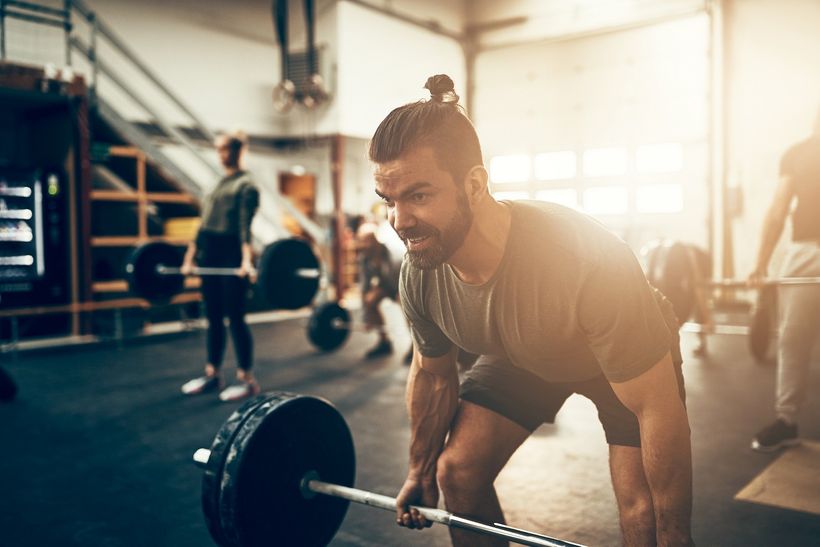
The effect of testosterone on muscle growth is often discussed, but have you ever wondered if it could also help you lose weight? According to research, it seems to be useful in this case as well. It turns out that being overweight or obese is commonly associated with reduced testosterone levels. For example, a study that followed 2,100 obese men showed that up to 52% of them had its levels below the optimal range. This research also showed that increasing its levels helped with weight loss.
Studies suggest that optimal testosterone levels are important for a functioning male metabolism and a healthy body weight. So if you want to lose weight, it's helpful to focus on lifestyle factors that can help optimize testosterone levels. These include the aforementioned dietary changes, exercise regimens, and certain nutritional supplements that aim to support testosterone production.
When you manage to reach your optimal weight, it will also be easier for you to maintain the correct level of this hormone. Fat mass is hormonally active, and its excessive amount can lead to the conversion of testosterone into estrogen. A healthy body weight thus limits these processes.
Estrogens are a group of female sex hormones. The main one is estradiol , and two other forms, estrone and estriol, also contribute to its action. These hormones are produced mainly in the ovaries, but some of them are also produced in the placenta, adrenal glands , and corpus luteum.
Estrogens are essential for the development of female reproductive organs and breasts, but they are also important for overall female health and proper body function.

A decrease in estrogen levels occurs naturally during menopause. This is what is associated with the typical hot flashes or more frequent fatigue. However, estrogen deficiency can also be a consequence of various diseases. It also occurs in women who struggle with the so-called female athletic triad . This is characterized by low energy availability, reduced bone density and amenorrhea (missed menstruation). Estrogen deficiency can make itself known through the following symptoms.
Low estrogen levels are a normal part of the menstrual cycle. Every month, the amount of this hormone naturally decreases, only to return to normal after a few days. This happens at the end of the luteal phase before menstruation begins and remains low throughout. Although this period is accompanied by symptoms of estrogen deficiency, it is a natural female cycle. The problem arises when estrogen deficiency is long-term.

For healthy estrogen levels, nutrition with enough energy and all the important nutrients is important. We can also see this in the case of the aforementioned female athletic triad, when women, typically athletes, have insufficient calorie intake and excessive expenditure. However, changes in diet and training can lead to improvements, including adjustment of estrogen levels and menstrual cycle. Therefore, women should not neglect sufficient calorie and nutrient intake.
Just like testosterone in men, estrogen is the sex hormone that plays the most important role in building muscle in women. In practice, this is also shown by the aforementioned menopause, which typically goes hand in hand with muscle loss. The muscles of postmenopausal women are less responsive to stimuli that can lead to muscle growth, such as strength training. At the same time, it seems that with low estrogen levels, more muscle protein is broken down than formed. Research shows that the optimal amount of estrogen can serve as a prevention of muscle loss. Of course, postmenopausal women can also do strength training and build muscle. However, it will be a little more difficult for them than in their youth.
Differences in a woman's body's willingness to build muscle also show up regularly throughout the month. Studies show a better response to training in the first half of the cycle (follicular phase) after menstruation and before ovulation, when estrogen levels are highest.
If you want to build muscle, you can certainly use the short window during the month when muscles grow most easily to increase your training load. However, it is more important to be consistent throughout the month. In doing so, do not forget to consume enough calories and nutrients to successfully prevent hormonal imbalances and maintain the right level of estrogen.

Healthy estrogen levels are an important part of women's health. Naturally, we assume that they also have an impact on metabolism and body weight. And this is confirmed by studies that show that normal levels of this hormone are associated with a faster metabolism and optimal body weight.
Conversely, being overweight and having a higher body fat percentage has been linked in scientific studies to estrogen deficiency. Typically, this is seen again in postmenopausal women who have low estrogen levels.
Optimal levels of this sex hormone can not only help maintain a healthy weight, but also facilitate weight loss. There are several ways in which it affects body fat percentage.

Progesterone is also a female sex hormone. It belongs to the group of gestagens and is produced in the corpus luteum in the ovaries during the luteal phase of the menstrual cycle. During pregnancy , it is also produced by the placenta. This hormone plays an important role in overall female health, and is especially important during pregnancy.
Progesterone is important for overall female reproductive health, but it also has several other functions.
Symptoms of low progesterone typically occur during the menstrual cycle. However, a deficiency of this hormone can also be serious during pregnancy. What are the symptoms of a deficiency?

The role of progesterone in muscle growth is not as well studied as that of testosterone or estrogen, but research to date suggests that it may have an anabolic effect, meaning it may contribute to muscle growth or regeneration.
As with muscle building, the role of progesterone in weight loss and weight maintenance is not well understood. However, we can say that overall hormonal balance is important for the body and its metabolism to function properly. Part of this balance is optimal progesterone levels. We can therefore assume that in order for the body to be able to maintain a normal weight or lose weight without any problems, it needs to have the right levels of this hormone.
The foundation of good health is hormonal balance. For both men and women, it is only then that the body will function properly. But how do we know that everything is fine with our hormones? First of all, possible symptoms can give us a hint.
For example, if a woman is experiencing irregular periods, it is likely that her estrogen or progesterone levels are not normal. Similarly, if a man is experiencing problems with his libido, fatigue, or moodiness, it could be due to low testosterone levels. For more serious symptoms, it is always a good idea to see a doctor who can test your sex hormone levels.
If you suspect a hormonal imbalance, it is advisable to focus on an overall lifestyle change.
If the hormone deficit is too great or causes health complications, leave the solution to your doctors. They can prescribe hormone replacement therapy to help you get your hormone levels back under control.
Sex hormones are important substances that we need for the proper functioning of our bodies. Testosterone in men is essential for sperm production, for example, while estrogen and progesterone are needed by women for a healthy menstrual cycle or a good pregnancy. In addition, they also affect metabolism and can have an important say in our body composition. In particular, normal levels of testosterone and estrogen are shown to be important if we want to successfully build muscle or lose weight.
We should definitely try to maintain healthy levels of sex hormones. A high-quality and varied diet with enough calories and nutrients , or supplements that directly target the support of these hormones, will help us with this.
GymBeam - https://gymbeam.sk/blog/ako-vplyva-testosteron-a-progesterone-na-chudnutie-a-rast-svalovej-hmoty/
Answers are generated by artificial intelligence from information on our website and may contain errors.